Live equityodds as you play
No-Limit Hold’em
No-Limit Texas Hold’em against 27 bots, with live equity, outs, pot odds and hand ranges as you play, and every hand there to replay and study.
Built out of curiosity. Given away.
Casino simulations that show their math. Tools for writing scripts, for taking apart TRS-80 programs, for putting your photos on the wall, and for watching the coffee brew. frotz, Inc., for writing and playing 1980s-style text adventures on the Z-machine. A 1971 slot car track, and the reborn catalog of VogelTronics, out of Elk Grove Village, Illinois.
Table games rebuilt as open-source simulations — true odds, basic strategy, and the exact house edge, all out in the open. No money, no sign-up.
No-Limit Texas Hold’em against 27 bots, with live equity, outs, pot odds and hand ranges as you play, and every hand there to replay and study.
Basic-strategy coaching and Hi-Lo card counting on rules taken straight from official casino documents.
A browser craps table for learning the line, the odds bets and where the edge really hides.
A real forward-physics wheel, proven fair by simulation — see exactly why you can’t beat it.
Reels, pins and multipliers. The loudest machines on any floor — and the ones that take the most. Here is exactly how.
Reel strips, virtual-reel weights and the exact-enumeration house edge across eight machine archetypes.
Optimal play, pay-table literacy and bankroll management — taught one hand at a time.
Ball-drop physics and payout pockets, with the odds behind the pins laid bare.
Watch the multiplier climb, cash out before the crash — then see why the house always wins.
Software for writing scripts and stories, taking old machines apart, putting photos on the wall, and keeping an eye on the coffee. Free, open source, no sign-ups, and your files stay yours.
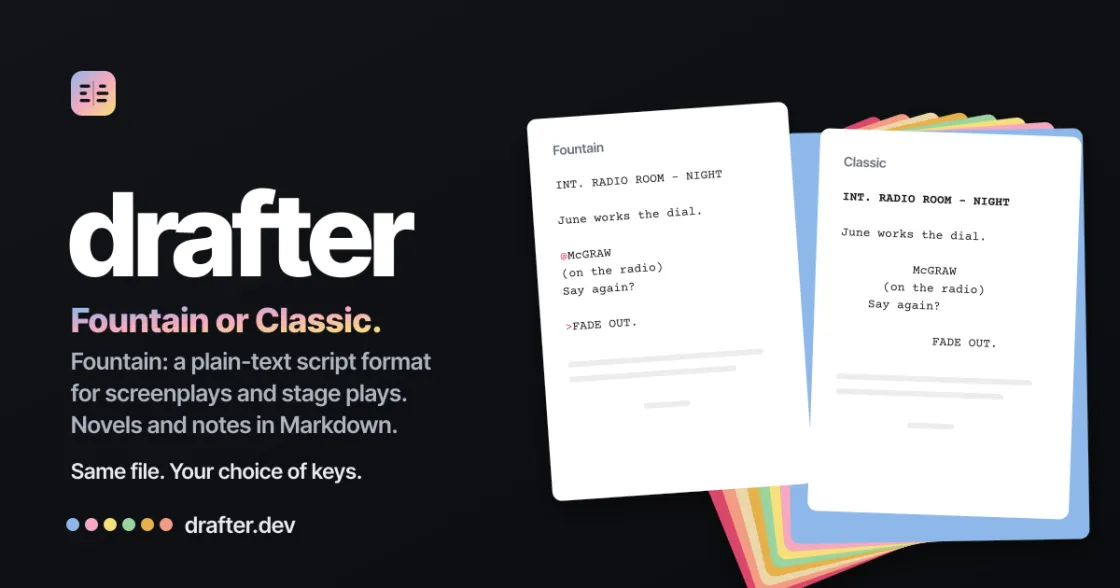
Write screenplays and stage plays in plain-text Fountain and watch the formatted pages build as you type, or draft a novel in Markdown.
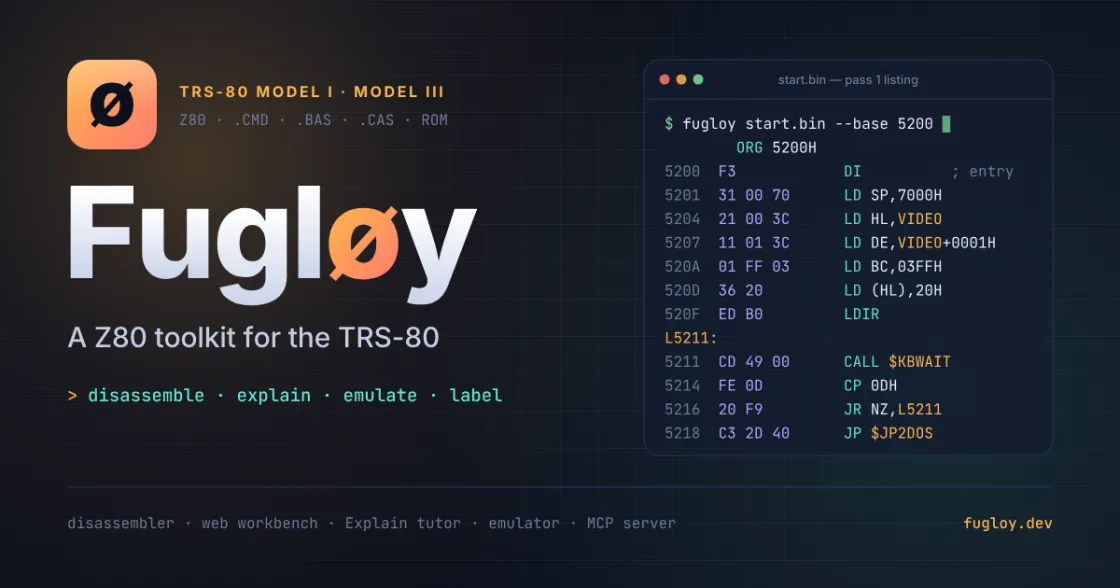
Take TRS-80 Model I and III programs apart: a disassembler whose output rebuilds the original byte for byte, a workbench that explains every line, and an emulator.

A digital picture frame you host yourself: a small computer behind a monitor, and your photos on every screen in the house. No subscription, no one else’s cloud.
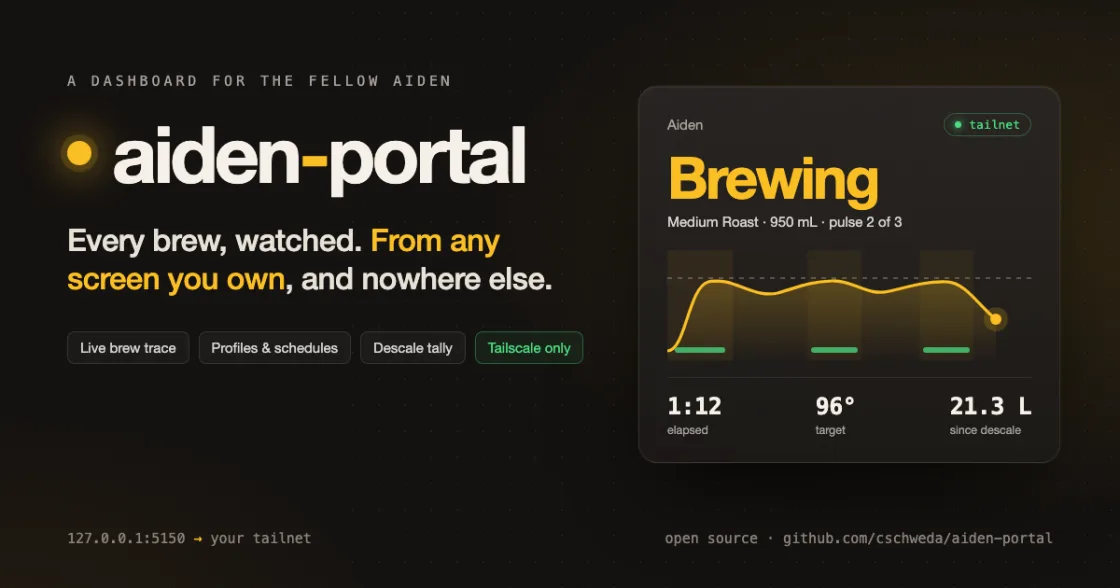
A dashboard for my Fellow Aiden coffee brewer: a live trace of every brew, profiles and schedules, a brew log and a descale tally. It runs on my own machine and is reachable only over Tailscale; the demo runs on invented data.
In 1979 Infocom wrote its adventures for an imaginary computer, the Z-machine, so one story file could run on every home computer of the day: you type GO NORTH or OPEN MAILBOX, and the game answers in prose. The format outlived the company, and people still write for it. frotz, Inc. is the umbrella for my Z-machine tools, which run in the browser and are open source.
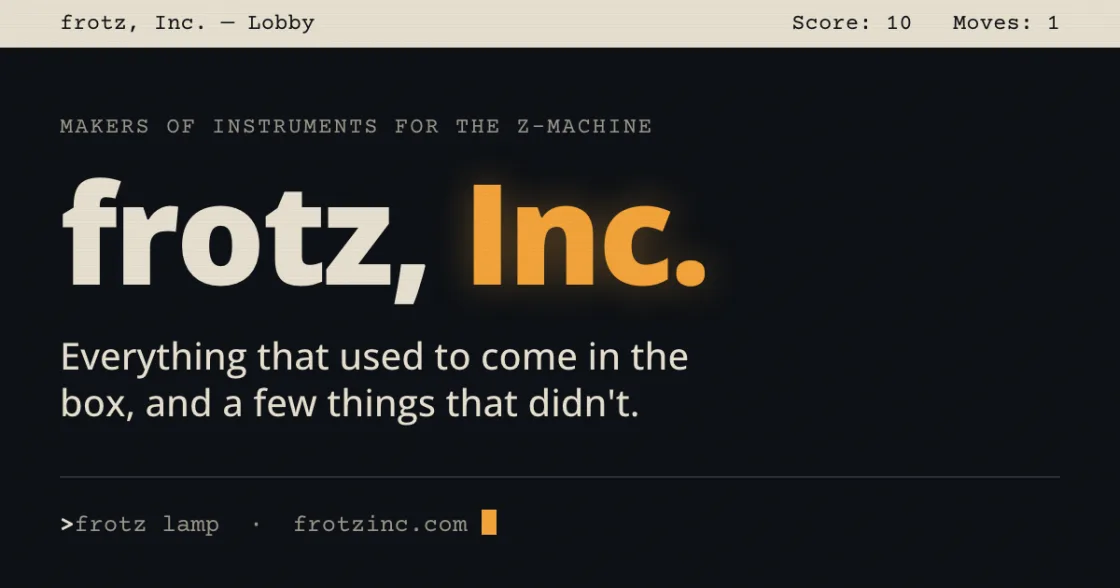
Instruments for the Z-machine: everything that used to come in the box, and a few things that didn’t. Write, build, play, inspect and ship Infocom-style text adventures, all in the browser.
Still to come: a debugger, a release packager, a linter and a regression tester.
No edge here, nothing to beat — just games built for the joy of it. Starting with a slot car track from 1971; more on the way.
Photoreal 1970s HO slot cars — squeeze the trigger, brake into the corner, or fly off into the shag carpet.
Elk Grove Village, Illinois, 1961 to 1983 — twenty-three years of chasing American childhood and never quite catching it, then one loud swerve into electronics at the end. Every toy here is rebuilt from the ground up: no trademarks borrowed, nothing lifted. Gridiron plays now; the rest of the shelf is on its way.
The magazine-style corporate history — Elk Grove Village, 1961, to the crash of 1983, forever in the wrong place at the wrong time.
The flagship’s voice chip, rebuilt — Votrax-class formant speech synthesis in the browser: type a phrase, hear 1980 arcade speech.
The 1977 LED football handheld, rebuilt for solo play — one bright blip against five tacklers, four downs to move the chains, and a kick on fourth. Keyboard-first.